📌 Key Takeaways
- Full knee straightening (0 degrees extension) is just as critical as knee bending for walking without a limp.
- Active swelling control via leg elevation and cryotherapy unlocks joint range of motion faster.
- In-home physiotherapy during weeks 1 to 3 avoids painful clinic commutes and protects early healing.
Total Knee Arthroplasty (TKA), commonly known as a Total Knee Replacement, is one of the most successful orthopedic surgeries performed worldwide. It provides dramatic long-term relief from end-stage osteoarthritis.
However, the surgery itself is only half the battle. The true success of your new joint depends on what happens in the first six weeks of rehabilitation.
For patients and families in Faridabad preparing for or recovering from surgery, here is what you can expect week by week during the crucial recovery window.
Week 1: Getting on Your Feet Safely
- Key Milestones: Early mobilization typically begins within 24 hours post-surgery. You will practice getting in and out of bed, standing with a walker, and navigating short bathroom transfers.
- Goals:
- Manage post-op swelling with ice and elevation.
- Achieve roughly 65 to 70 degrees of knee flexion (bending) and work toward 0 degrees of extension (straightening).
- Practice gentle ankle pumps to prevent blood clots (DVT).
Weeks 2 to 3: Gaining Functional Bending
- Key Milestones: Stitches or surgical clips are typically removed around day 12 to 14. Walking distances increase, and patients gradually transition from a two-wheeled walker to a quad cane or walking stick.
- Goals:
- Reach 90 degrees of knee flexion (crucial for sitting comfortably in standard chairs).
- Complete knee straightening (extension) is essential—a knee that cannot fully straighten leads to a limp.
- Active home physiotherapy exercises: Heel slides, seated knee extensions, and straight leg raises.
Weeks 4 to 6: Confidence, Stairs, and Walking Free
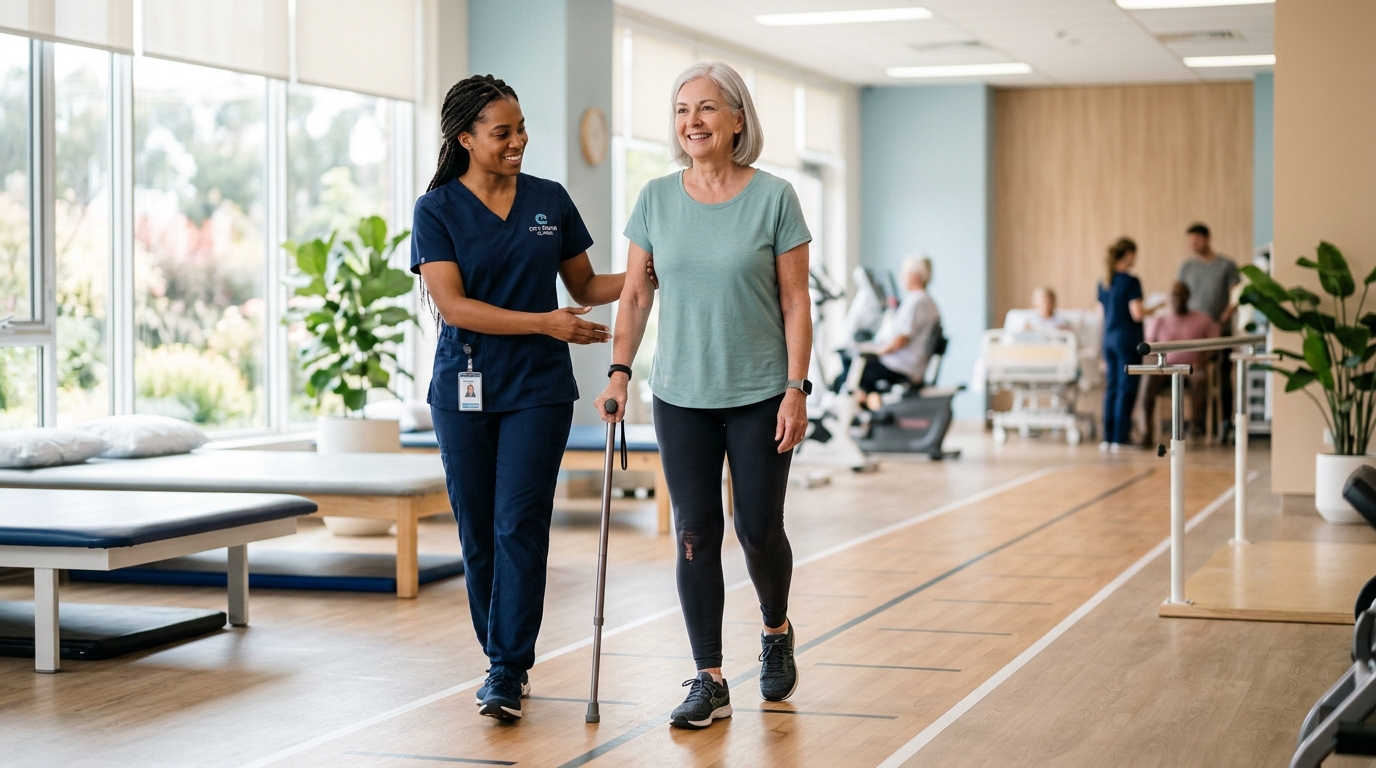
- Key Milestones: Most patients begin walking with minimal assistive devices around the house and can climb stairs step-over-step with handrail support.
- Goals:
- Achieve 105 to 115+ degrees of flexion.
- Build quadriceps endurance and hip stabilizer strength.
- Normalizing your gait pattern—avoiding compensatory swinging of the hip or leaning.
"Do NOT place a pillow directly under your operated knee in bed! While it feels comfortable, it encourages a flexion contracture (permanent bend). Keep your leg flat to preserve 0-degree full extension."
3 Critical Rules for Post-Operative Knee Rehab
1. Straightening Is as Important as Bending
Many patients obsess over how far they can bend their knee. While bending is important, full knee extension (0 degrees) is even more vital. If your knee cannot straighten flat, every step you take requires extra muscular effort, leading to hip and lower back fatigue.
2. Manage Swelling Actively (R.I.C.E.)
Inflammation is natural, but excessive joint effusion physically blocks knee movement. Elevate your leg above heart level multiple times a day and apply cryotherapy (ice pack) for 20 minutes following every exercise session.
3. Pain Medication Timing
Take your prescribed analgesic 30 to 45 minutes before your scheduled physiotherapy session. This allows you to work through therapeutic range-of-motion exercises without muscle guarding or extreme discomfort.
The Advantage of Home Physiotherapy in Faridabad
Traveling to a clinical center immediately following knee replacement can be painful and inconvenient. Getting in and out of cars and negotiating building stairs poses avoidable risks during the first two to three weeks.
At Nerivahealth, Dr. Abhishek Kumar provides specialized in-home post-operative physiotherapy visits across Faridabad. We bring therapeutic equipment directly to your bedside, ensure proper home environment setup, monitor incision healing, and guide gentle progressive exercises in the comfort of your living room.
Suffering from similar symptoms?
Get an accurate diagnosis and a customized recovery plan from Dr. Abhishek Kumar.
Book Clinic Assessment Chat on WhatsApp