📌 Key Takeaways
- For every inch your head tilts forward, your neck bears an extra 4.5 to 5 kg of pressure.
- Chin tucks and scapular squeezes retrain deep neck flexors and stabilize posture.
- Follow the 30-minute rule: Change posture and reset spinal alignment regularly.
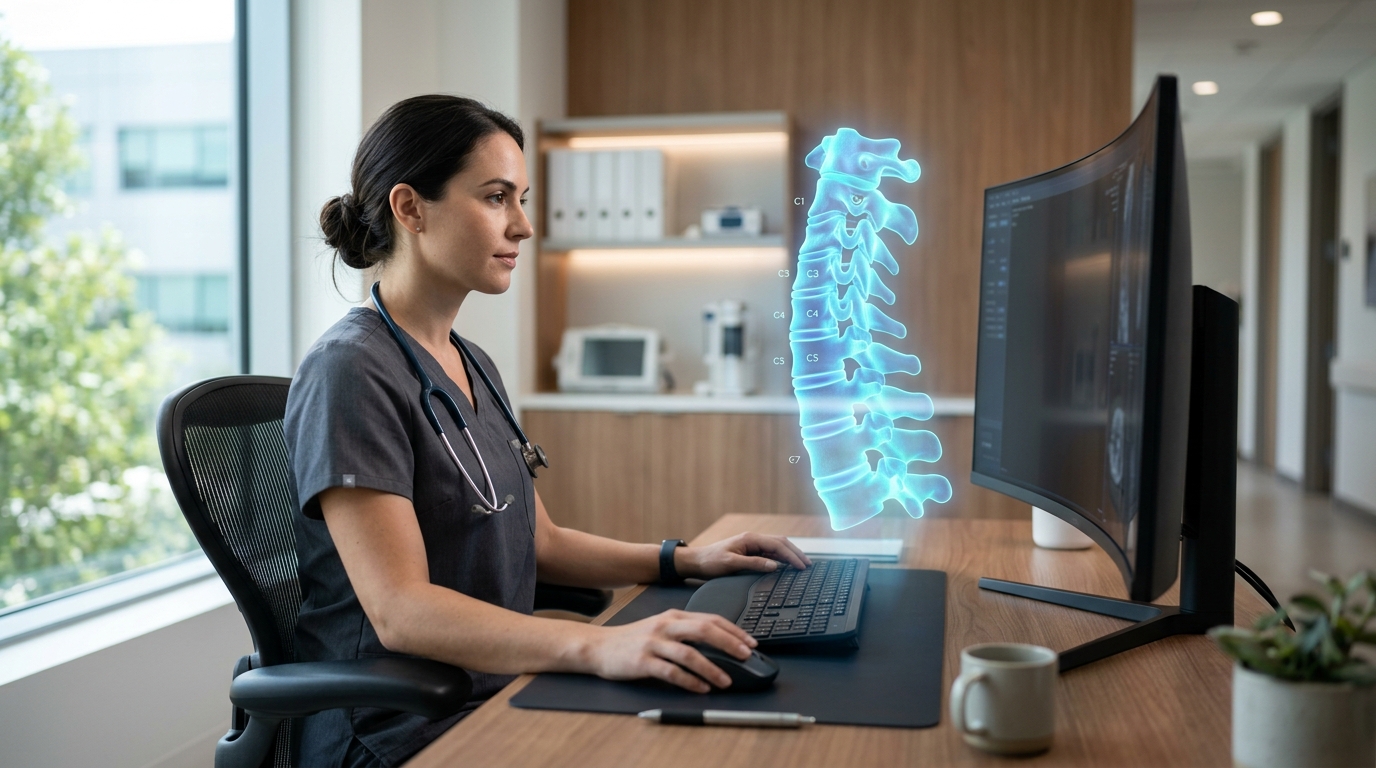
Modern work often means spending eight or more hours sitting in front of laptops, monitors, and smartphones. Over time, holding your head forward—a condition commonly known as “Tech Neck”—places immense mechanical strain on the cervical spine and surrounding muscles.
For every inch your head drifts forward past neutral alignment, the cervical spine experiences an extra 4.5 to 5 kg of weight. This leads to chronic upper back tightness, stiffness, and tension headaches.
Here are 5 simple, effective desk exercises recommended by Dr. Abhishek Kumar to restore cervical mobility and relieve tension throughout your workday.
1. Chin Tucks (Cervical Retraction)
Chin tucks are one of the most effective movements for strengthening deep neck flexors and reversing forward-head posture.
- How to do it: Sit upright with your back supported. Looking straight ahead, gently draw your chin straight back as if making a subtle “double chin”.
- Repetitions: Hold for 3 to 5 seconds, release, and repeat 10 times.
- Tip: Do not tilt your head down; keep your eyes focused horizontally.
2. Shoulder Blade Squeezes (Scapular Retractions)
Long hours of typing cause the pectoral muscles to tighten while the upper back muscles become lengthened and weak.
- How to do it: Sit tall with arms relaxed at your sides. Pull both shoulder blades back and down toward each other, as if squeezing a pencil between your spine.
- Repetitions: Hold for 5 seconds and repeat 10 to 12 times.
- Benefit: Opens up the anterior chest wall and activates the mid-trapezius and rhomboids.
3. Upper Trapezius Stretch
The upper trapezius muscles carry a disproportionate amount of physical and mental stress throughout the workday.
- How to do it: Sit on your right hand to anchor your shoulder down. Gently bring your left ear toward your left shoulder until you feel a comfortable stretch along the right side of your neck.
- Repetitions: Hold for 20 to 30 seconds, breathe deeply, and switch sides.
- Caution: Never pull forcefully on your head; allow gentle guidance only.
4. Seated Thoracic Extension
Hunched sitting locks up the mid-back (thoracic spine), forcing the neck to compensate.
- How to do it: Place your hands behind your head with elbows pointing outward. Lean back over the top of your chair’s backrest, looking slightly upward toward the ceiling.
- Repetitions: Hold for 3 to 5 seconds at the end-range and repeat 8 times.
- Benefit: Mobilizes the thoracic vertebrae and promotes upright lung expansion.
5. Levator Scapulae Stretch
The levator scapulae connects the cervical vertebrae to the shoulder blade and is often the primary culprit behind localized neck knots.
- How to do it: Turn your head 45 degrees to the left, and gently tuck your chin toward your left armpit. You will feel a targeted stretch down the opposite side of your neck.
- Repetitions: Hold for 20 to 30 seconds per side.
"Never roll your neck in full 360-degree circles. Tipping your head backward while grinding your cervical vertebrae can pinch sensitive nerve roots. Stick to controlled lateral stretches and chin tucks."
Setting Up Your Workspace for Success
Exercise works best when paired with ergonomic adjustments:
- Screen Height: The top third of your display should be at eye level.
- Elbow Angle: Keep elbows bent at 90 degrees with forearms supported.
- The 30-Minute Rule: Set a subtle reminder to stand up, stretch, or change positions every 30 to 45 minutes.
When to Seek Professional Physiotherapy
If neck stiffness is accompanied by persistent headaches, radiating tingling into your shoulders or fingers, or doesn’t improve with stretching, you should undergo a clinical assessment.
At Nerivahealth Physiotherapy & Rehabilitation Centre in Sector 45, Faridabad, Dr. Abhishek Kumar provides comprehensive cervical assessments, manual joint mobilizations, and customized postural correction programs.
Suffering from similar symptoms?
Get an accurate diagnosis and a customized recovery plan from Dr. Abhishek Kumar.
Book Clinic Assessment Chat on WhatsApp